Home / Procedures / Accessory Breast Removal

Accessory Breast Removal

Axillary Breast Tissue Excision · Polymastia Correction

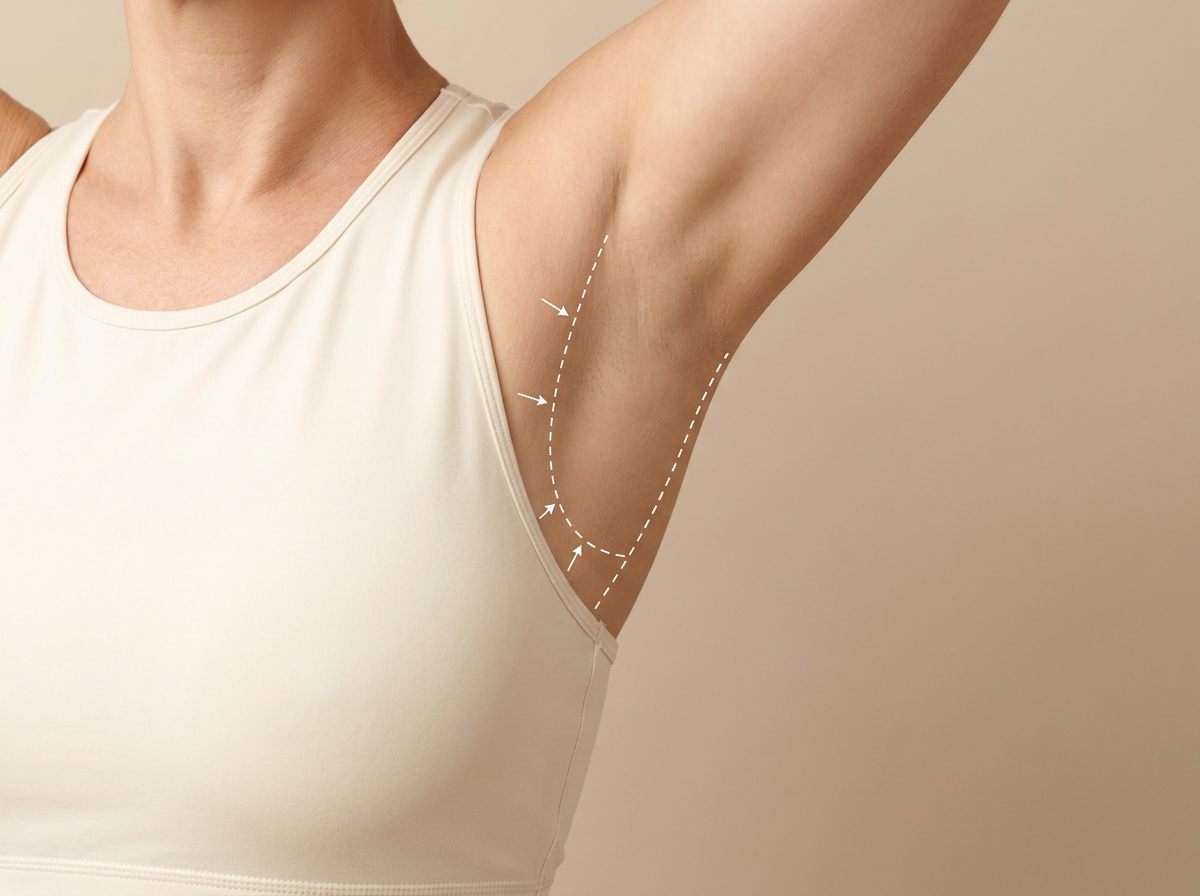
This procedure removes extra breast tissue that develops outside the normal breast area, most often in the armpit. It is for women bothered by visible fullness, discomfort, or swelling in this area, particularly around the menstrual cycle.

Accessory Breast Removal
Duration1–2 hours
AnaesthesiaGeneral, or local with sedation
Hospital stayDay case
Back to work5–7 days

Who this procedure suits

Accessory breast tissue is a congenital variation where glandular tissue persists along the embryonic milk line, usually in the armpit. It can enlarge with weight change, pregnancy, or hormonal shifts, and may cause visible bulging, tenderness, or difficulty with clothing and bras. Surgery removes this tissue and typically improves the contour of the armpit and side of the chest.

A good candidate if

  • Visible or palpable lump in the armpit that swells before menstruation
  • Discomfort or chafing from tissue rubbing against clothing or bra straps
  • Self-consciousness about armpit fullness in fitted clothing
  • Tissue confirmed as accessory breast rather than a lymph node or other mass on imaging

Not suitable if

  • Undiagnosed lump without prior imaging or clinical assessment
  • Active infection or skin breakdown in the axillary area
  • Uncontrolled bleeding disorder
  • Pregnancy or active breastfeeding

How the procedure is performed

Consultation

We examine the area, discuss your history, and usually request an ultrasound or mammogram to confirm the diagnosis before planning surgery.

Preparation

You will have routine pre-operative blood tests and a fitness assessment. We review your medications and advise on stopping blood thinners if relevant.

Surgery

The accessory tissue is removed through a small, carefully placed incision in the armpit or along a natural skin fold, aiming to minimise scar visibility.

Follow-up

We see you within the first week to check the wound, then again to review healing and scarring.

Accessory Breast Removal

Recovery — what actually happens

Day 1-3Rest with the arm supported. Mild swelling and bruising in the armpit are expected. Pain is usually manageable with prescribed medication.
Week 1Wound checked. Gentle arm movement is comfortable and light daily activities can resume; avoid heavy lifting.
Week 2-4Most swelling settles. Gradual return to normal arm use and light exercise, guided by your surgeon.
Month 2-3Scar begins to soften and fade. Full range of shoulder and arm movement typically returns.
Month 6-12Scar continues to mature and lighten. Final contour of the armpit area is visible.

Honest medicine — the risks

Every surgical procedure carries potential risks. Risks vary with the procedure and your health, and the surgeon will discuss them with you along with the measures used to reduce them:

ScarringIncisions are placed within natural skin folds where possible to keep scars discreet
InfectionSterile technique and, when indicated, antibiotics reduce this risk
Delayed wound healingCareful tissue handling and wound care instructions support healing
Fluid collection (seroma)Fluid can be aspirated in clinic if needed
ThromboembolismEarly mobilisation and, where appropriate, compression measures are used
Numbness or altered sensationThis is usually temporary as small nerves recover, though it can occasionally persist
AsymmetryCareful pre-operative marking and surgical planning aim to achieve balanced results, though tissue variation means perfect symmetry cannot be guaranteed
Frequently asked questions

Is accessory breast tissue the same as a swollen lymph node?

No. They can feel similar but are different structures. Imaging such as ultrasound helps tell them apart before any surgery is planned.

Will the tissue grow back after removal?

Once the tissue is excised, it does not typically regrow, though any remaining glandular tissue nearby could still respond to hormonal changes.

Can this be done alongside breast surgery?

In some cases, yes, if it suits your anatomy and overall surgical plan. This is assessed individually during consultation.

Will there be a visible scar?

A scar is unavoidable with any incision, but it is placed within the armpit fold where possible to reduce visibility.

Do I need a biopsy before surgery?

Imaging and sometimes a needle biopsy are recommended beforehand to confirm the diagnosis and rule out other causes of the lump.

Is this procedure right for you?

The only correct answer comes from a clinical examination. Book a consultation — in person, or by video if you are outside the UAE.

Book a consultation
Book a consultation